
Two Different Approaches to Pain and Recovery
If you are dealing with back pain, neck stiffness, a recent injury, or a chronic condition that will not go away, you have probably wondered whether a chiropractor or a physical therapist is the right call. Both professions treat pain and musculoskeletal problems, but they approach treatment differently.
Understanding those differences can help you make a more informed decision about your care and, in many cases, get you feeling better sooner.
What Chiropractors Do
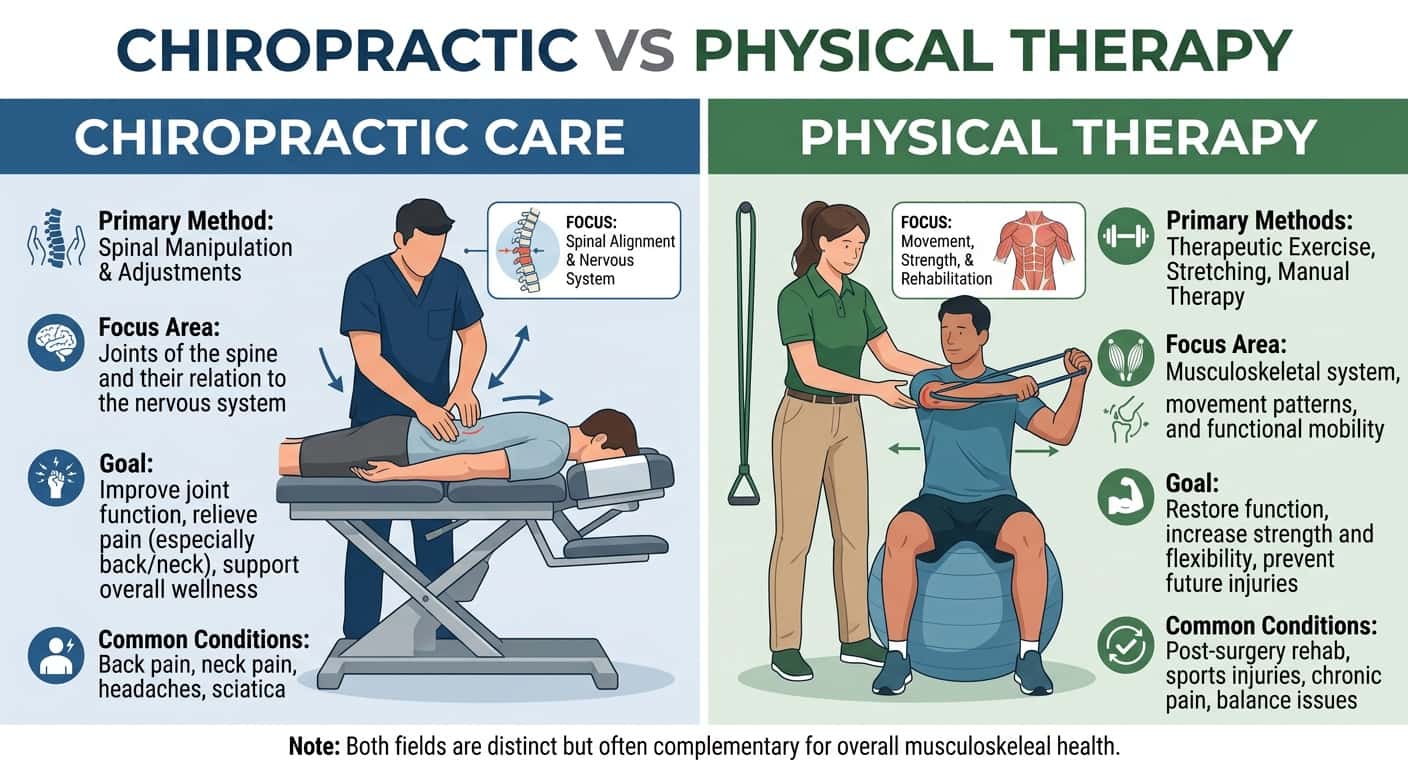
Chiropractors are doctors who specialize in the diagnosis and treatment of conditions related to the spine, joints, and nervous system. The core of chiropractic care is the spinal adjustment, a targeted, controlled force applied to a joint to restore proper alignment and improve function.
At Advanced Wellness Chiropractic, Dr. Je'an-Claude Bordeaux (Dr. JC) uses chiropractic adjustments as the foundation of care but goes well beyond that with additional treatment methods:
- Shockwave therapy to stimulate healing in chronic tendon injuries, reduce inflammation, and break down scar tissue
- Active Muscle Release to release tight muscles and improve mobility
- Graston Technique to treat fascial adhesions and soft tissue restrictions
- Massage therapy to relax muscles and support recovery
Chiropractors focus on structural alignment and how the spine and joints affect the nervous system. When a joint is misaligned or restricted, it can cause pain, inflammation, and dysfunction in the surrounding muscles and nerves.
What Physical Therapists Do
Physical therapists (PTs) specialize in improving movement, strength, and function through exercise-based rehabilitation. A typical PT session involves guided exercises, stretches, manual therapy, and sometimes modalities like ultrasound or electrical stimulation.
Physical therapy is often prescribed after surgery, a major injury, or a stroke. PTs build programs around progressive exercises designed to restore strength and range of motion over time, with an emphasis on exercises performed both in the clinic and at home.
Key Differences at a Glance
The primary difference comes down to focus. Chiropractic care centers on spinal alignment, joint function, and the nervous system. Physical therapy centers on movement, strength, and exercise-based rehabilitation.
When to See a Chiropractor
Chiropractic care is typically the better choice when your pain is related to joint alignment, spinal dysfunction, or nerve irritation. Common conditions where chiropractic treatment excels include:
- Low back pain: the most common reason people visit a chiropractor. Adjustments restore mobility and reduce the nerve irritation that causes pain.
- Neck pain: whether from poor posture, a car accident, or sleeping wrong, chiropractic adjustments target the cervical spine directly.
- Headaches and migraines: many headaches originate from tension and misalignment in the upper cervical spine. Chiropractic care addresses the source.
- Sciatica: disc herniations and spinal misalignments that compress the sciatic nerve respond well to chiropractic treatment.
- Car accident injuries: whiplash and soft tissue injuries from auto collisions are treated effectively with a combination of adjustments and soft tissue therapies.
- Shoulder pain and knee pain: joint dysfunction and associated soft tissue problems benefit from the combination of adjustments and targeted therapies like shockwave.
You do not need a referral to schedule with our office. Some insurance plans require one for coverage, so check your plan.
When to See a Physical Therapist
Physical therapy is usually the better option when your primary need is rebuilding strength, restoring range of motion after surgery, or relearning functional movements. If you have had a joint replacement, ACL reconstruction, or a neurological condition, physical therapy will likely be part of your recovery plan.
Can You Benefit from Both?
Absolutely. Chiropractic care and physical therapy are not mutually exclusive, and in many cases they complement each other well. A chiropractor can correct the structural issues causing your pain while a physical therapist can help you build strength to prevent it from returning.
At Advanced Wellness Chiropractic, we incorporate rehabilitative exercises and soft tissue therapies that overlap with what a physical therapist might provide. For many patients, especially those with back pain, neck pain, or joint dysfunction, chiropractic care provides everything they need without requiring a separate PT referral.
What the Research Says
Chiropractic for low back pain: A randomized trial published in Spine (Goertz et al., 2013) found that active-duty military personnel with acute low back pain who received chiropractic manipulation along with standard medical care had significantly better pain and physical function scores at two and four weeks than those who received standard medical care alone.
Spinal manipulation vs exercise therapy: A randomized trial published in the Annals of Internal Medicine (Bronfort et al., 2012) compared spinal manipulation, medication, and home exercise for acute and subacute neck pain. Spinal manipulation was more effective than medication for both short-term and long-term pain relief. Notably, home exercise and manipulation produced similar long-term outcomes, supporting the complementary nature of both approaches.
Cost of care: A study published in the Journal of Manipulative and Physiological Therapeutics (Liliedahl et al., 2010) analyzed claims from one Tennessee health insurer and found that paid costs for episodes of low back pain care that started with a chiropractor were almost 40% less than episodes that started with a medical doctor, and 20% less after adjusting for patient risk.
How to Decide What Is Right for You
If your pain is related to your spine or joints, start with a chiropractor. If you are recovering from surgery or need to rebuild strength after a major injury, physical therapy is likely the priority. If you have chronic pain that has not responded to exercise or medication, a chiropractor can evaluate whether a structural issue is the underlying cause. When in doubt, a chiropractic consultation can help clarify what is going on and whether your condition is best addressed in our office or requires a referral elsewhere.
Get Answers at Advanced Wellness Chiropractic
If you are in Bridgeton, MO, or the surrounding areas of St. Ann, Maryland Heights, Hazelwood, or greater St. Louis, Dr. JC is here to help you figure out the best path forward. New patients can schedule a first visit to get a full consultation, exam, and first treatment.
Learn more about the benefits of regular chiropractic care or find out what to expect at your first visit. Contact us today or call (636) 393-8390 to schedule your visit. The sooner you understand what is causing your pain, the sooner you can start fixing it.