Why Sitting All Day Hurts Your Back
If you work at a desk, you already know the feeling. You sit down in the morning feeling fine and by mid-afternoon your lower back is aching, your neck is stiff, and your shoulders feel like they are cemented to your ears. This is not just discomfort. It is your body telling you that prolonged sitting is taking a real toll on your musculoskeletal system.
The human body was not designed for eight or more hours of sitting each day. When you sit, your hip flexors shorten and tighten, your glutes essentially shut off, and your spine loses its natural curvature as you slouch forward toward the screen. Over time, this creates a cascade of problems. Tight hip flexors pull your pelvis forward, increasing stress on the low back. Rounded shoulders compress the thoracic spine and strain the muscles of the upper back and neck. The longer this goes on without intervention, the harder it becomes to reverse.
At Advanced Wellness Chiropractic in Bridgeton, MO, we see desk workers every single week who are dealing with pain that started as mild stiffness and gradually became a chronic problem. The good news is that a few minutes of targeted stretching throughout your day can make a significant difference in how your body feels and functions. Here are five stretches we recommend to every patient who spends their workday seated.
1. Seated Figure-Four Hip Stretch
Tight hips are one of the biggest contributors to low back pain in desk workers. The piriformis and other deep hip rotators become shortened and restricted from prolonged sitting, which can pull on the pelvis and create tension throughout the lower back.
How to do it: While seated in your chair, cross your right ankle over your left knee so your right shin is roughly parallel to the floor. Sit up tall and gently lean forward from the hips, keeping your back straight. You should feel a deep stretch in the outside of your right hip and glute. Hold for 30 seconds, then switch sides.
When to do it: Perform this stretch two to three times on each side, at least twice during your workday. It is especially helpful after you have been sitting for an hour or more without a break.
2. Doorway Chest Stretch
Hours of typing and mouse work cause the chest muscles to shorten while the upper back muscles become overstretched and weak. This imbalance is what creates that rounded-shoulder posture you see in nearly every office worker. Opening up the chest counteracts this pattern and takes pressure off the thoracic spine.
How to do it: Stand in a doorway and place your forearms on each side of the frame with your elbows at shoulder height. Step one foot forward through the doorway until you feel a comfortable stretch across your chest and the front of your shoulders. Keep your core engaged and avoid arching your lower back. Hold for 30 seconds.
When to do it: Do this stretch three times, ideally every couple of hours. If you notice your shoulders rolling forward as you work, that is your cue to get up and open up the chest.
3. Cat-Cow Spinal Mobilization
This is not just a yoga move. The cat-cow sequence is one of the most effective ways to restore mobility to a spine that has been locked in one position for too long. It moves the spine through flexion and extension, lubricating the joints and relieving pressure on the discs.
How to do it: Get on your hands and knees with your wrists under your shoulders and your knees under your hips. On an inhale, drop your belly toward the floor, lift your chest, and look slightly upward (cow position). On an exhale, round your back toward the ceiling, tuck your chin, and draw your belly button toward your spine (cat position). Move slowly between these two positions.
When to do it: Perform 10 to 15 slow repetitions. This is an excellent stretch to do first thing in the morning, during a midday break, and at the end of your workday. If getting on the floor is not practical at your office, you can do a modified version seated in your chair by simply rounding and arching your spine while sitting.
4. Upper Trapezius and Levator Scapulae Stretch
The muscles along the top of your shoulders and the sides of your neck take an enormous amount of strain when you work at a computer. The upper trapezius and levator scapulae are the muscles most commonly involved in that tight, knotted feeling between the neck and shoulder. Left unchecked, this tension is a primary driver of tension headaches and chronic neck pain.
How to do it: Sit up tall in your chair and reach your right hand over your head to gently pull your left ear toward your right shoulder. Keep your left shoulder relaxed and down. Hold for 20 seconds, then rotate your head slightly so you are looking toward your right armpit and apply gentle pressure again. This second position targets the levator scapulae more directly. Hold for another 20 seconds, then switch sides.
When to do it: Repeat two to three times per side, at least twice daily. If you carry stress in your neck and shoulders, doing this stretch every hour can prevent tension from building up throughout the day.
5. Standing Hip Flexor Stretch
Your hip flexors are among the tightest muscles in any desk worker's body. When they shorten from prolonged sitting, they pull the pelvis into an anterior tilt, which increases the curve in your lower back and compresses the lumbar discs. Stretching the hip flexors is one of the single most important things you can do to protect your lower back.
How to do it: Stand up and take a large step back with your right foot. Bend your left knee to about 90 degrees while keeping your right leg straight behind you with a slight bend at the knee. Tuck your tailbone slightly and squeeze your right glute. You should feel a stretch in the front of your right hip. For a deeper stretch, raise your right arm overhead and lean slightly to the left. Hold for 30 seconds, then switch sides.
When to do it: Perform this stretch two to three times per side. Do it every time you stand up from your desk for a break. It only takes a minute and the difference it makes in how your low back feels is immediate.
How Often Should You Stretch?
Consistency matters more than duration. Stretching for two minutes every hour is far more effective than doing a long stretching session once at the end of the day. Set a timer on your phone or computer to remind you to stand and move every 45 to 60 minutes. Each break does not need to be long. Even cycling through one or two of these stretches each time you stand up will add up to a meaningful difference over the course of a week.
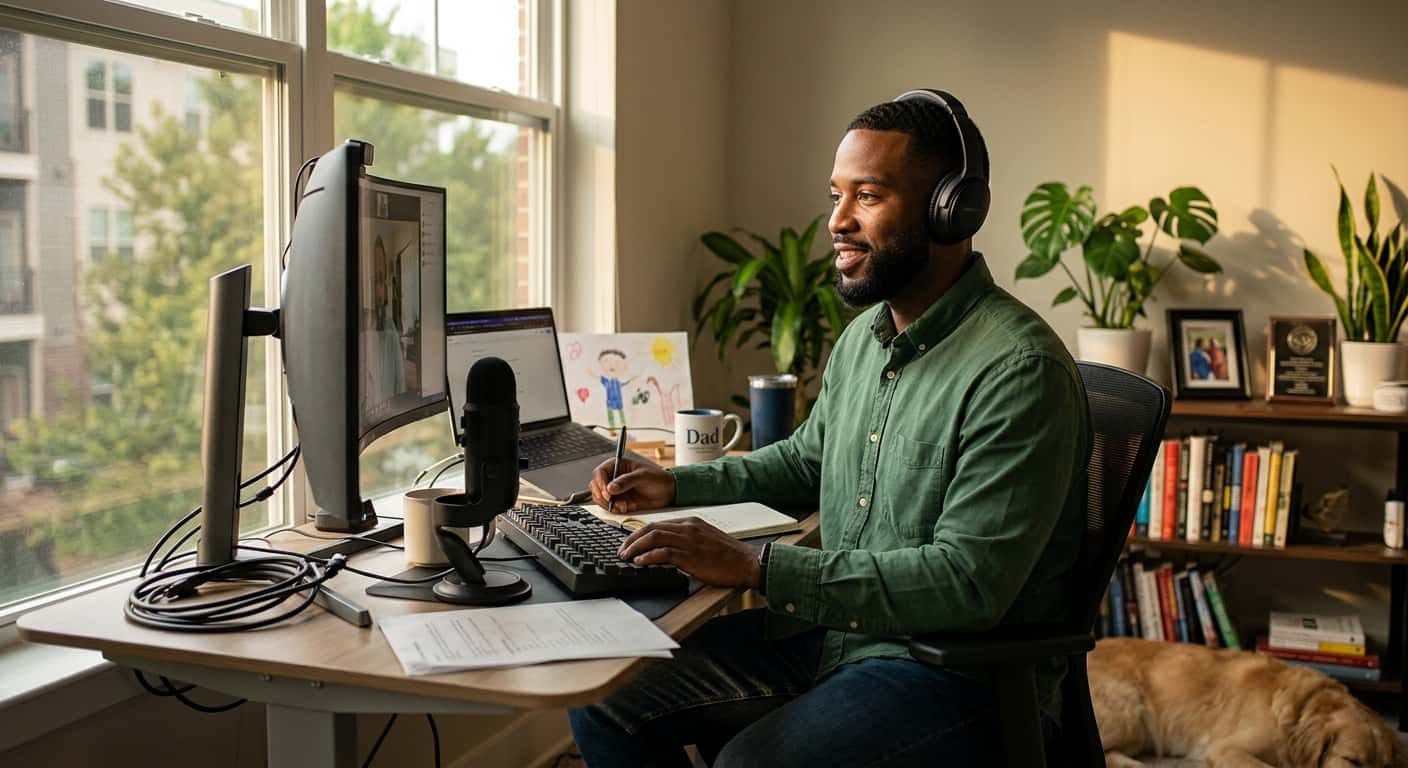
Beyond stretching, your workstation setup plays a major role in how your body feels. Your monitor should be at eye level, your elbows should rest at roughly 90 degrees, and your feet should be flat on the floor. Small adjustments to your chair height, screen position, and keyboard placement can reduce strain significantly. If you work from home, our article on back pain from working at home covers practical ergonomic tips for home offices.
When Stretching Is Not Enough
Stretching is a powerful preventive tool, but it has its limits. If you have been dealing with persistent low back pain, neck stiffness, or headaches that do not resolve with stretching and movement, there may be a joint restriction or alignment issue that needs professional attention.
Chiropractic adjustments restore proper motion to joints that have become fixated from prolonged poor posture. When a segment of your spine is not moving correctly, the muscles around it tighten up to protect it, creating a cycle of stiffness and pain that stretching alone cannot break. An adjustment restores that motion, and the muscles can relax.
At Advanced Wellness Chiropractic, Dr. JC combines adjustments with soft tissue techniques to address both the joint and muscular components of desk-related pain. Many of our patients in the Bridgeton and greater St. Louis area come in specifically because their desk job has created problems that stretching and ergonomic changes have not fully resolved.
Take Care of Your Body While You Work
Your desk job does not have to mean chronic pain. These five stretches take less than five minutes total and can be done without any equipment right at your workstation. Start incorporating them into your daily routine and notice how much better your back, neck, and shoulders feel within a week.
If you are already dealing with pain that has built up over months or years of sitting, we are here to help. Schedule an appointment at Advanced Wellness Chiropractic or call (636) 393-8390 to get started. Our Bridgeton, MO office serves patients throughout the St. Louis metro area who want to feel better at work and beyond.

Related Articles
Preventing Fall Sports Injuries in St. Louis Heat
Help young athletes handle St. Louis preseason heat, sudden workload increases, and common fall sports injuries. Learn prevention tips and warning signs.
Wellness TipsSleep Position and Back Pain: How You Sleep Could Be Hurting You
Waking with back or neck pain? Learn how sleep position, pillows, and mattresses affect pain, with practical guidance from a Bridgeton chiropractor.
Wellness TipsChiropractic Care During Pregnancy in Bridgeton, MO
Considering care for back or pelvic discomfort during pregnancy? Learn what to ask, what to expect, and when to contact your obstetric team first.