America's Fastest-Growing Sport Has a Side Effect
Pickleball took over the parks, gyms, and community centers around Bridgeton and the greater St. Louis area faster than anyone expected. It is easy to learn, social, and addictive in the best way. It is also producing a wave of injuries that did not used to come through our door in these numbers. The 40 to 65 demographic that drives most of the sport is the same demographic that has tendons, joints, and discs that do not bounce back the way they did at 25.
At Advanced Wellness Chiropractic, we have treated dozens of pickleball players in the last 18 months. Most of them love the sport, want to keep playing, and just need their body to cooperate. The good news is that almost every pickleball injury we see responds well to conservative care if you address it early. Below are the seven injuries we see most often, why they happen, and what to do about each one.
1. Pickleball Elbow (Tennis Elbow / Lateral Epicondylitis)
This is the single most common pickleball injury we treat, and it is essentially identical to tennis elbow. The repetitive snapping motion of dinks, drives, and volleys creates micro-tears in the extensor tendons on the outside of the elbow. New players are especially vulnerable because they tend to grip the paddle too tightly and use too much wrist instead of shoulder.
You feel it as a sharp or burning pain on the outside of the elbow, often radiating down the forearm. Grip strength suffers. Opening a jar or shaking hands hurts. Left alone, it tends to become chronic.
We treat pickleball elbow with shockwave therapy, Graston Technique, and Active Muscle Release. Shockwave may be considered for some chronic tendon problems. We also look at the wrist, shoulder, and neck because pain at the elbow is almost always a downstream symptom of poor mechanics further up the chain. Read our tennis elbow page for the full breakdown.
2. Pickleball Knee (Patellar Tendinopathy and Patellofemoral Pain)
Pickleball involves a lot of starting, stopping, lateral shuffling, and quick direction changes on a small court. The knee absorbs most of that load, and the tendon below the kneecap takes a particular beating. Players also tend to overdo it early. A new player who plays four games on Saturday will often wake up Sunday with knee pain that lasts a week.
Pain shows up below or around the kneecap, often after activity rather than during it. Going down stairs hurts more than going up. Squatting becomes uncomfortable. Some players develop a clear swelling around the knee.
We approach pickleball knee with adjustments to restore normal hip and ankle motion (the knee gets blamed for problems above and below it more than any other joint), soft tissue work on the quads and IT band, and shockwave therapy for the tendon itself when it has been irritated for more than a few weeks. Footwear matters a lot here too. Running shoes are the wrong shoe for pickleball, and we will explain why. See our knee pain page for more.
3. Low Back Pain and Stiffness
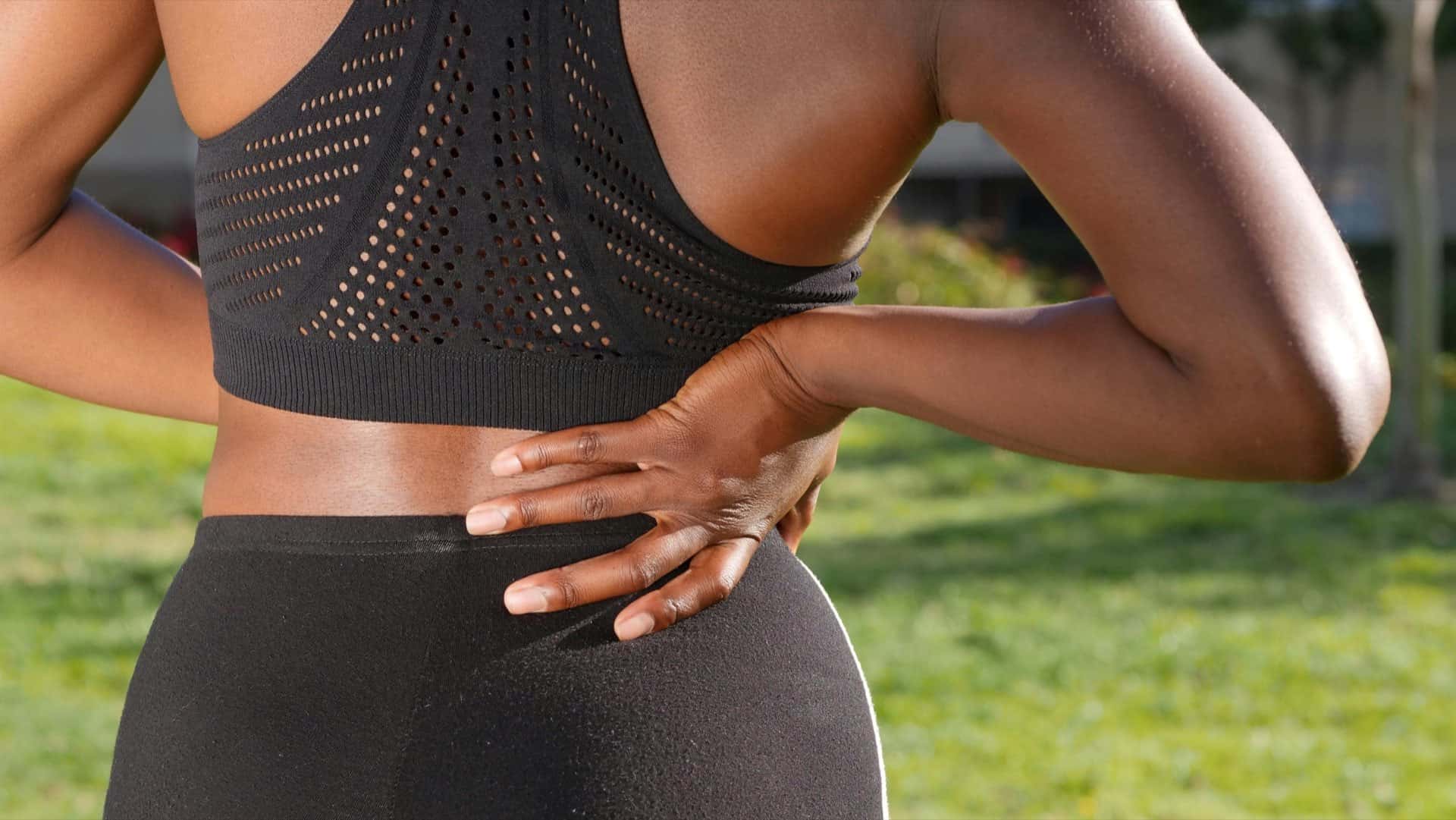
The pickleball ready position is a slight crouch with the paddle up, and players spend a lot of time bending and twisting from that position. Combine that with weak glutes and tight hip flexors (the standard profile for most adults), and the low back ends up absorbing forces it was not designed to handle alone.
Patients describe a deep ache after playing, morning stiffness for the first hour, or a sharp pain when reaching for a shot near the feet. Some have a real disc issue that pickleball exposed rather than caused.
Care for the low back includes chiropractic adjustments to restore normal lumbar and SI joint motion, soft tissue work on the hip flexors, glutes, and lumbar paraspinals, and targeted exercises to wake up the deep core stabilizers. Our low back pain page covers the conditions we see most often. If you have leg pain along with back pain, our article on sciatica is worth reading.
4. Achilles Tendinopathy and Calf Strains
Pickleball involves a lot of pushing off the back foot to chase down balls, and the Achilles tendon takes that load every time. Older players are especially vulnerable because the tendon naturally stiffens with age. A sudden lunge, a chase to the kitchen line, or a quick stop can strain the calf or irritate the Achilles.
You feel it as morning stiffness at the back of the heel, pain on the first few steps out of bed, or a sharp pull during play. Some players develop a visible thickening of the tendon.
Shockwave therapy may be considered for some chronic tendon problems. We pair this with Active Muscle Release on the calf and posterior chain, and a graded loading program to rebuild the tendon's capacity.
5. Plantar Fasciitis
The same forces that drive Achilles problems also drive plantar fascia issues. The plantar fascia is the thick band of tissue that runs along the bottom of your foot, and it gets loaded with every push off and landing. Players who jump straight into multiple weekly sessions without easing in are especially vulnerable.
The hallmark sign is sharp pain on the first few steps out of bed in the morning, easing slightly as you move but returning at the end of the day. Some players also feel a stabbing pain at the inside of the heel.
We treat plantar fasciitis with shockwave therapy, soft tissue work on the calf and plantar fascia, and adjustments to the foot and ankle when they are restricted. Footwear and arch support are also important parts of the conversation. See our plantar fasciitis page for more detail.
6. Shoulder Pain (Rotator Cuff and Biceps Tendon)
Overhead shots and serves load the rotator cuff and biceps tendon. Players in their 50s and 60s often already have some baseline rotator cuff wear, and the repetitive overhead motion of pickleball can turn a quiet shoulder into a noisy one.
You feel it as pain reaching overhead, pain sleeping on the affected side, or a deep ache in the front or side of the shoulder during and after play. Some patients describe a clicking or catching sensation.
We work the shoulder with adjustments to restore proper scapular motion, Active Muscle Release on the rotator cuff and upper back, and shockwave therapy for chronic tendon issues. Our shoulder pain page goes deeper, and our post on shockwave therapy for shoulder pain covers the specifics of treating rotator cuff tendinopathy.
7. Pickleball Wrist (Wrist and Forearm Strain)
The wrist absorbs the impact of every paddle hit, and players who use too much wrist flick or grip too tightly often develop a chronic ache on the inside or outside of the wrist. Some develop true carpal tunnel symptoms because of repetitive flexion and grip.
You feel it as wrist stiffness, weakness on lifting or pouring, or numbness and tingling into the fingers in the case of nerve involvement.
Treatment includes work on the forearm and wrist with Active Muscle Release and Graston Technique, adjustments to the wrist, elbow, and cervical spine, and a hard look at your grip mechanics on the court.
How to Stay on the Court
A few habits make an enormous difference in whether your body can handle the volume of pickleball you want to play.
Warm up before every session. A five-minute walk plus some leg swings, arm circles, and a few light dinks before the first hard point would prevent at least half of the pickleball injuries we see. Cold tendons do not like sudden loading.
Strength train at least twice a week. Your body needs to be strong enough for the sport. Squats, hinges, pushes, pulls, and rotational work two days a week makes a significant difference in injury rates for adult athletes.
Wear court shoes, not running shoes. Running shoes are designed for forward motion and have a soft midsole that rolls under you on lateral cuts. Court shoes have lateral support and are designed for the kind of movement pickleball demands. This is one of the cheapest and highest-impact changes you can make.
Build up gradually. New players often go from zero to five sessions a week. Your tendons need time to catch up with your enthusiasm. Three sessions a week for the first month is plenty.
Listen to early warning signs. A two-day ache that fully resolves is normal. A two-week ache that comes and goes with play is not. The earlier you address an issue, the faster it resolves.
When to See a Chiropractor
You should get checked if any of the following apply.
- Pain that has lasted more than two weeks
- Pain that is changing how you move on the court
- Pain that is keeping you awake at night
- Numbness, tingling, or radiating symptoms
- A specific event that produced pain that has not improved
We see a lot of sports chiropractic cases at our Bridgeton office, and pickleball makes up a growing portion of them. A first visit includes a thorough history, a sport-specific movement exam, and a plan that gets you back on the court as quickly and safely as possible.
If you are in Bridgeton, St. Ann, Maryland Heights, Hazelwood, Florissant, or anywhere in greater St. Louis and pickleball has been giving your body more grief than fun lately, schedule an appointment or call (636) 393-8390. We will figure out exactly what is going on and build a plan to keep you in the game.