When Shoulder Pain Will Not Go Away on Its Own
If you have been dealing with shoulder pain for more than three months and rest, ice, anti-inflammatories, or a round of physical therapy have not solved it, you are not alone. Chronic shoulder pain is one of the most stubborn musculoskeletal complaints we treat at Advanced Wellness Chiropractic in Bridgeton, MO. Patients tell us they have tried everything short of surgery, and the surgery referral feels like the only path forward.
It is not always. Shockwave therapy is one of the non-surgical options for chronic shoulder conditions that have not improved with conservative care, and Dr. JC offers it at our Bridgeton office.
What Shockwave Therapy Actually Does
Shockwave therapy, or extracorporeal shockwave therapy (ESWT), uses acoustic energy pulses to stimulate healing deep within damaged tissue. The technology was originally developed in the 1980s to break up kidney stones without surgery and was later adapted for musculoskeletal medicine.
The exact mechanism is not fully understood. When applied to a chronically injured shoulder, the acoustic energy is thought to:
- Stimulate new blood vessel formation (neovascularization) in tissue that has lost healthy blood supply
- Break down calcific deposits that form in tendons
- Trigger a fresh inflammatory response in tissue that has gotten "stuck" in chronic non-healing
- Change pain signaling in the treated area
- Stimulate collagen production in tendon and ligament tissue
Shoulder Conditions Shockwave Is Used For
Not every shoulder pain is a good fit for shockwave. The shoulder conditions we most often evaluate for shockwave include:
Calcific Tendinopathy of the Rotator Cuff
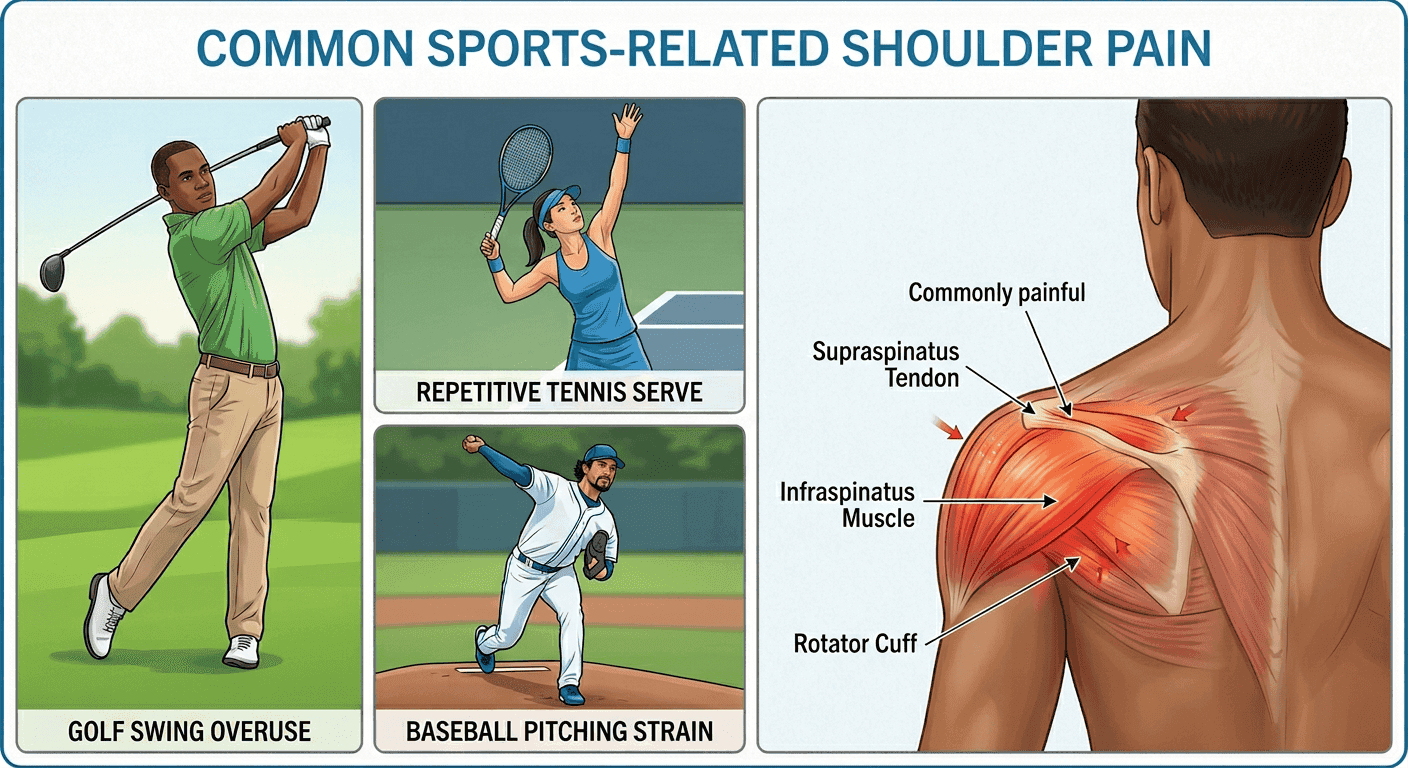
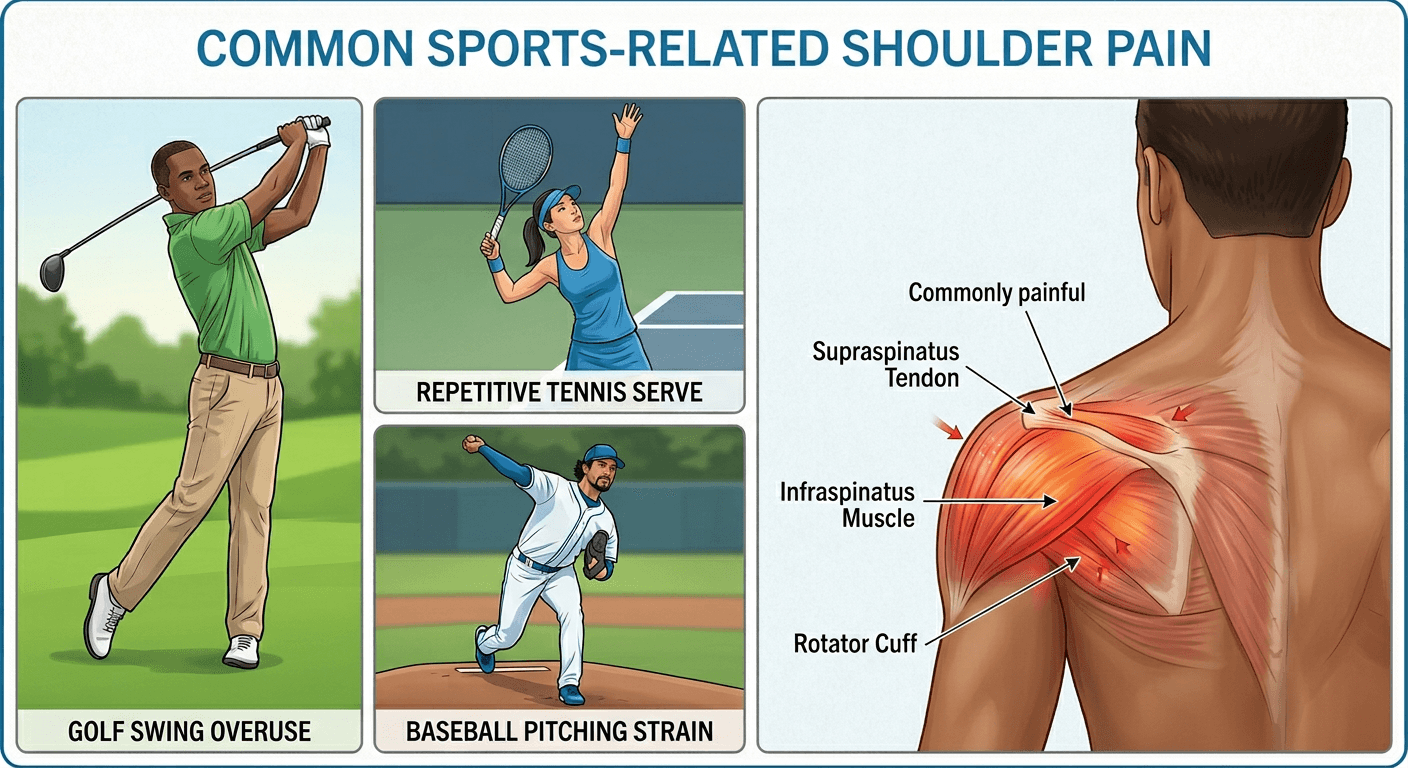
Calcium deposits inside the supraspinatus or other rotator cuff tendons can cause sharp pain, especially with overhead motion or at night. A 2024 systematic review and meta-analysis in BMC Musculoskeletal Disorders pooled 16 randomized trials of shockwave therapy for rotator cuff tendinopathy, with and without calcification. Its authors concluded that the evidence is currently limited, and that it suggests shockwave therapy can provide better pain relief and functional recovery than the comparison treatments. Many patients we see have already been told the deposits are visible on imaging and that surgery may be the next step. Shockwave is a non-surgical option to discuss before that step.
Chronic Rotator Cuff Tendinopathy (Without Full Tear)
When the rotator cuff is irritated and weak but not fully torn, shockwave is one of the options we consider. Rotator cuff tendinopathy is especially common in patients in their 40s, 50s, and 60s who do repetitive overhead work or sports.
Frozen Shoulder (Adhesive Capsulitis)
For frozen shoulder, care relies on manual therapy and exercise. Shockwave may be discussed when the exam also points to calcific tendinitis of the rotator cuff.
Subacromial Impingement With Chronic Inflammation
When the subacromial space is chronically inflamed and steroid injections have not held, shockwave is another conservative option to discuss.
Conditions Where Shockwave Is NOT the Answer
Honesty matters here. Shockwave is not appropriate for:
- A complete rotator cuff tear that needs surgical repair
- Acute trauma within the first few weeks of injury
- Patients with a pacemaker or defibrillator near the treatment site
- Patients on blood thinners without medical clearance
- Active infection in the shoulder area
- Pregnancy
If your shoulder pain falls into one of these categories, we will tell you honestly during your evaluation and refer appropriately.
What a Shockwave Session Actually Feels Like
A typical shoulder shockwave session at our Bridgeton clinic takes 20 to 30 minutes. After identifying the precise treatment area (often confirmed by tender-point palpation), we apply a coupling gel and deliver between 3,000 and 4,000 acoustic pulses through the device's applicator.
The sensation varies by patient and by depth. Most patients describe it as a deep tapping or thumping that intensifies during the session. It is not pleasant, but it is generally well-tolerated. Energy levels are adjusted based on your tolerance and the condition being treated.
After the session, the area may be mildly sore for 24 to 48 hours, similar to a deep tissue massage. We ask patients to skip ice and avoid anti-inflammatories the day of treatment because both may blunt the response we are trying to trigger. Do not stop a prescribed medication, including aspirin or a blood thinner, without asking your prescriber.
How Many Sessions It Takes
A typical shoulder plan is 3 to 6 weekly sessions. Some patients notice a change early, others later in the series, and some do not respond. With calcific tendinopathy, any change in the deposits can take weeks.
We reassess at every visit and adjust the plan based on your response. If we are not seeing the change we expect by session 3 or 4, we have a frank conversation about whether to continue, change tactics, or refer for imaging or surgical consultation.
Combining Shockwave With Chiropractic
For most shoulder cases we treat, shockwave alone is not the full answer. The shoulder is biomechanically connected to the cervical spine, thoracic spine, and scapula. If those structures are restricted, the rotator cuff can continue to overwork even after the tendon itself has been treated.
Our protocol typically combines:
- Chiropractic adjustments to the cervical and thoracic spine
- Active Muscle Release to address scapular muscle restrictions
- Graston technique for fascial restrictions and scar tissue
- Shockwave therapy for the specific tendon or calcific deposit
- Home exercise prescription to continue the work between sessions
Who We Commonly See in the Bridgeton & St. Louis Area
Patients we commonly evaluate for shoulder shockwave include:
- Painters, electricians, and overhead trades with chronic supraspinatus issues
- Pickleball, tennis, and racquet sport players dealing with rotator cuff irritation
- Office workers with calcific deposits
- Older adults told they need rotator cuff surgery but want a non-surgical attempt first
- Baseball and softball coaches and recreational players with chronic throwing-related cuff inflammation
- Postpartum mothers dealing with shoulder strain from infant-carrying
If your shoulder pain has been there for 3 months or longer, has not responded to other treatment, and you would rather avoid surgery, an evaluation is the next logical step. We will examine the shoulder, determine whether shockwave is appropriate, and either start treatment or recommend a different path.
Schedule a Shoulder Evaluation
Stop guessing whether your shoulder will heal on its own. Call (636) 393-8390 or schedule online to book a complete evaluation at Advanced Wellness Chiropractic in Bridgeton, MO. Most evaluations take 45 to 60 minutes and include a complete shoulder exam, a clear explanation of what is going on, and a personalized treatment recommendation. Same-day appointments are often available Monday through Thursday afternoons. Call (636) 393-8390 to confirm.