Can a Chiropractor Help with Shoulder Pain?
Yes. For many patients, chiropractic care is the most effective conservative treatment they have tried. Shoulder pain is one of the top three musculoskeletal complaints seen in primary care, and it often persists because the underlying cause (restricted joints, nerve irritation, and tight soft tissue) is never directly addressed.
At Advanced Wellness Chiropractic in Bridgeton, MO, Dr. Je'an-Claude Bordeaux regularly treats patients who have been dealing with shoulder discomfort for weeks or months, sometimes after being told to just rest or wait for surgery. Chiropractic care offers a genuine path forward without drugs or invasive procedures.
Common Causes of Shoulder Pain
The shoulder is the most mobile joint in the human body, trading stability for flexibility. That range of motion is what lets you throw a baseball, swing a golf club, or reach overhead, and it is also what makes the shoulder one of the most injury-prone joints you have.
Understanding what is driving your pain is the first step toward treating it effectively:
Rotator Cuff Injuries
The rotator cuff is a group of four muscles and tendons that stabilize the shoulder. Repetitive overhead activity (painting, swimming, pitching, warehouse work) causes small tears or chronic inflammation in these tendons. Rotator cuff problems are among the most common causes of shoulder pain in adults over 40.
Shoulder Impingement Syndrome
Impingement occurs when the rotator cuff tendons get pinched between the shoulder bones during movement. It typically produces sharp pain when lifting the arm above shoulder height or reaching behind the back.
Frozen Shoulder (Adhesive Capsulitis)
Frozen shoulder develops when the joint capsule thickens and tightens, severely limiting range of motion. It most commonly affects people between 40 and 60 and often follows a period of immobilization after surgery, injury, or illness.
Referred Pain from the Neck and Upper Back
This one is frequently missed. The nerves that supply sensation to the shoulder originate in the cervical spine (neck). Misalignments or restrictions in the neck and upper thoracic spine can generate pain felt entirely in the shoulder, even when the shoulder joint itself is structurally intact.
If your neck pain and shoulder pain tend to travel together, treating the spine is often as important as treating the shoulder. Addressing only the shoulder without correcting the cervical spine frequently produces incomplete or short-lived results.
Shoulder Bursitis
Bursae are small fluid-filled sacs that cushion shoulder bones and tendons. Repetitive motion or direct trauma inflames them, causing deep aching and tenderness throughout the joint.
How Chiropractic Treats Shoulder Pain
The goal of chiropractic care for shoulder pain is to restore normal joint mechanics, reduce inflammation, and improve the strength and coordination of the muscles supporting the joint, not just mask symptoms.
Chiropractic Adjustments
Chiropractic adjustments can be applied directly to the shoulder joint or to the cervical and thoracic spine, depending on what the exam finds. When a joint is restricted and not moving through its full range, adjustments restore motion, reduce nerve irritation, and calm the surrounding muscle guarding.
For shoulder pain rooted in cervical dysfunction, spinal adjustments often produce improvement in shoulder symptoms faster than treating the shoulder alone. Many patients who have struggled for months notice meaningful changes after the first few sessions once the neck component is addressed.
Graston Technique and Soft Tissue Therapy
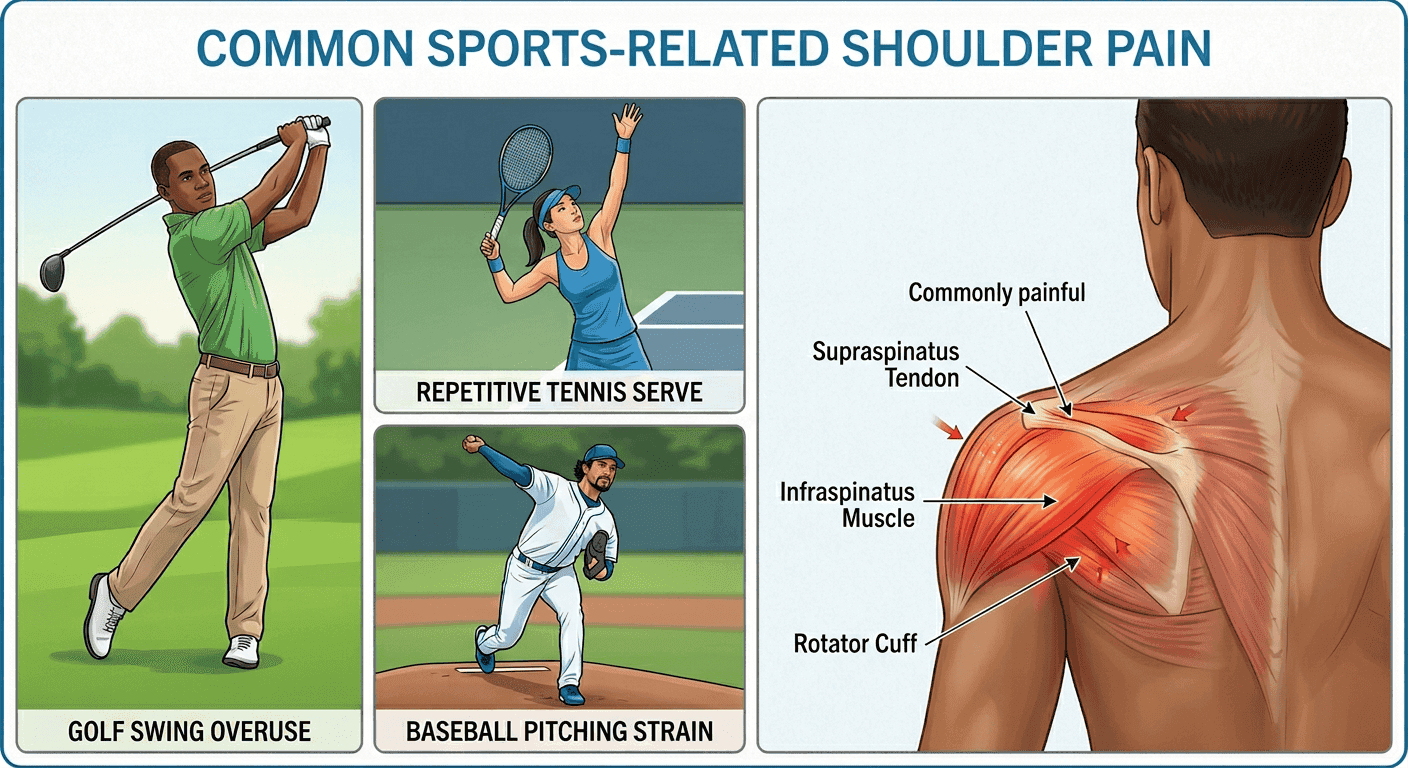
Tight muscles and restricted fascia are almost always part of the shoulder pain picture. Graston Technique uses specialized stainless-steel instruments to break up scar tissue and adhesions in muscles like the trapezius, supraspinatus, and infraspinatus: key muscles that commonly hold tension in shoulder conditions.
Active Muscle Release releases soft tissue restrictions that limit shoulder range of motion and contribute to impingement. Together, these therapies address the muscular layer that adjustments alone cannot fully reach.
Shockwave Therapy
For chronic shoulder conditions like calcific tendinitis or stubborn rotator cuff tendinopathy, shockwave therapy may be worth discussing when other treatments have not helped. This non-invasive treatment delivers acoustic pressure waves into the affected tissue.
If your shoulder has not responded to rest or anti-inflammatories, ask whether shockwave therapy is an option for you. Shockwave therapy is self-pay at our office.
Massage Therapy
Massage therapy plays an important supporting role. The muscles of the neck, upper back, and shoulder blade region all contribute to shoulder function, and chronic tension in these areas perpetuates a cycle of restriction and pain. Targeted massage breaks this cycle and makes adjustments more effective and longer-lasting.
What the Research Says
Spinal manipulation for shoulder pain: A single-arm trial published in Physical Therapy (Mintken et al., 2010) gave cervicothoracic manipulation to 80 people with shoulder pain. Of those, 49 reported a successful short-term outcome. The study had no comparison group.
Shockwave therapy for calcific tendinitis: A randomized controlled trial published in JAMA (Gerdesmeyer et al., 2003) compared high-energy shockwave therapy, low-energy shockwave therapy, and sham treatment in 144 patients with chronic calcifying tendonitis of the rotator cuff. At six months, both shockwave groups had improved shoulder function scores more than the sham group, and the high-energy group improved more than the low-energy group. Self-rated pain and the size of the calcifications also improved.
Manual therapy and exercise: A randomized trial of 30 patients with shoulder impingement syndrome, published in Knee Surgery, Sports Traumatology, Arthroscopy (Senbursa et al., 2007), compared a home exercise program with in-clinic manual therapy plus exercise. Both groups had less pain and better function, and the manual therapy group improved significantly more.
Conservative care and rotator cuff tears: A randomized controlled trial published in The Journal of Bone and Joint Surgery (Kukkonen et al., 2015) compared physiotherapy alone, acromioplasty with physiotherapy, and rotator cuff repair with acromioplasty and physiotherapy for nontraumatic supraspinatus tears. At two years there was no significant difference in clinical outcome between the three groups, and the authors concluded that conservative treatment is a reasonable first option for these tears in older patients.
What to Expect at Your First Visit
When you come to Advanced Wellness Chiropractic for shoulder pain, Dr. JC will not begin treatment without a thorough evaluation. A proper assessment includes:
- Full symptom history: when the pain started, what aggravates or relieves it, prior injuries or surgeries
- Orthopedic and neurological testing to identify the specific structures involved
- Assessment of shoulder range of motion and strength
- Evaluation of the cervical and thoracic spine, which frequently contribute to shoulder symptoms
From there, Dr. JC will explain his findings, walk through your options, and build a plan matched to your situation. No surprises, no pressure.
New to chiropractic? Our guide on what to expect at your first visit covers the full process from intake to adjustment.
Shoulder Pain and Spring Sports
April in the St. Louis metro means golf season is underway, youth baseball leagues are in full swing, and tennis courts are filling back up. These activities place significant demands on the shoulder, and after a winter of relative inactivity, the joint and its surrounding muscles are often unprepared for the sudden increase in load.
We see a predictable spike in shoulder complaints every spring. Rotator cuff strains, impingement, and biceps tendinitis are especially common among golfers and overhead athletes returning to play after the off-season.
If you're active in sports and want to start the season right, or if you've already tweaked your shoulder and want to prevent a minor problem from becoming a major one, early evaluation makes a real difference. Athletes who address shoulder problems promptly return to full activity faster than those who push through the pain.
When to Seek Immediate Care
Most shoulder pain responds well to conservative chiropractic care. However, some situations require urgent attention:
- Sudden, severe pain after a fall or collision: possible fracture or dislocation
- Complete inability to raise the arm: may indicate a full-thickness tendon tear
- Shoulder pain with chest pain, shortness of breath, or jaw pain: seek emergency care immediately; these can signal a cardiac event
For the vast majority of presentations (chronic aching, stiffness, limited range of motion, pain with specific movements), chiropractic evaluation is a safe and appropriate first step.
A Non-Surgical Option Worth Trying First
The most common question Dr. JC hears from shoulder pain patients is: "Will I need surgery?" The honest answer is that many shoulder conditions are managed without surgery, and an exam helps sort out which path fits yours.
Surgery carries real risks and requires significant rehabilitation time. Before pursuing an invasive option, a structured conservative care plan deserves a genuine try. Many patients are surprised by how much improvement is possible without ever needing a surgical referral.
Get Your Shoulder Evaluated in Bridgeton, MO
Shoulder pain does not have to be something you simply live with. Whether it has been bothering you for two weeks or two years, a proper evaluation can clarify what is happening and map out a treatment approach that delivers real results.
Advanced Wellness Chiropractic serves patients in Bridgeton, St. Ann, Maryland Heights, Hazelwood, and throughout the greater St. Louis area.
Schedule your appointment at Advanced Wellness Chiropractic by calling (636) 393-8390 or visiting our contact page. Dr. JC and the team at our Bridgeton, MO office are ready to help you get your shoulder, and your life, moving again.

Related Articles
Back Pain After Mowing: Causes, Relief, and Warning Signs
Back pain after mowing or yard work? Learn what causes it, what helps during the first 48 hours, and when to see a Bridgeton chiropractor.
Pain ReliefGLP-1 Joint Pain: Causes and Chiropractic Care
New back, knee, or joint pain while taking a GLP-1 medication? Learn possible causes and how chiropractic care may help in Bridgeton, Missouri.
Pain ReliefSciatica: When to Call a Chiropractor vs. Go to the ER
Sciatica pain that won't quit? Most cases respond to chiropractic care, but a few warning signs mean head to the ER. Here is how to tell.