More Than Just Scraping
If you have heard of Graston Technique, you may have seen videos online of metal instruments being dragged across skin. It can look intense, but the reality is more nuanced than what social media shows. Graston Technique is a clinically validated form of instrument-assisted soft tissue mobilization (IASTM) that has been used by chiropractors, physical therapists, and athletic trainers for over 25 years.
At Advanced Wellness Chiropractic in Bridgeton, MO, Dr. JC uses Graston Technique as part of a full treatment approach for patients dealing with chronic pain, restricted movement, and soft tissue injuries.
How Graston Technique Works
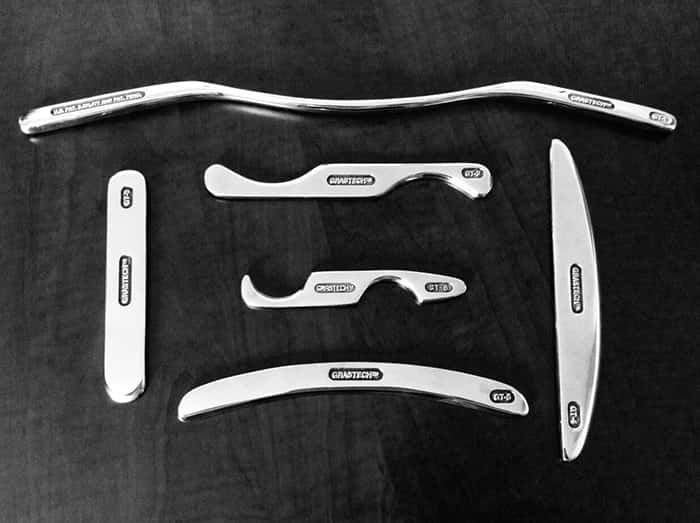
The technique uses six patented stainless steel instruments, each shaped differently to treat specific areas of the body. These instruments allow the clinician to detect and treat areas of scar tissue, fascial restrictions, and chronic inflammation that are difficult to address with hands alone.
When the instrument glides over the skin, it creates a controlled micro-trauma in the affected soft tissue. This does three things:
- Breaks down adhesions and scar tissue: Collagen fibers that have formed in a disorganized pattern during the healing process are disrupted, allowing the body to rebuild them in proper alignment
- Increases blood flow: The localized inflammation response brings fresh blood supply to the area, delivering nutrients needed for tissue repair
- Stimulates the nervous system: Mechanoreceptors in the fascia and muscles are activated, which can reduce pain signaling and improve proprioception
The instruments also give Dr. JC tactile feedback. As the instrument passes over tissue, adhesions and restrictions create a vibration or grittiness that can be felt through the instrument. This allows for precise identification and treatment of problem areas.
What Conditions Does Graston Technique Treat?
Chronic Tendon Problems
Tendinopathy in the elbow (tennis elbow), shoulder, knee, and Achilles tendon responds well to Graston Technique. These conditions involve degenerated tendon tissue that needs mechanical stimulation to restart the healing process.
Plantar Fasciitis
The thick fascia on the bottom of the foot can develop adhesions and micro-tears that cause intense pain with each step. Graston instruments can effectively treat the plantar fascia and the calf muscles that contribute to the condition.
Post-Surgical Scar Tissue
After surgery, scar tissue can form around the incision site and in deeper tissues. This scar tissue can restrict movement and cause pain months or even years after the procedure. Graston Technique helps remodel this tissue and restore normal function.
Neck and Back Pain
Chronic neck pain and low back pain often involve fascial restrictions and muscle adhesions that limit spinal mobility. Treating these soft tissue components alongside chiropractic adjustments produces better outcomes than either treatment alone.
IT Band Syndrome
Runners and cyclists frequently develop tightness and inflammation in the iliotibial band, which runs along the outside of the thigh. Graston instruments can effectively treat the length of the IT band and the surrounding tissues.
Carpal Tunnel Syndrome
Carpal tunnel symptoms can be caused or worsened by adhesions in the forearm muscles and the fascia surrounding the median nerve. Graston Technique applied to the forearm and wrist can reduce compression on the nerve and improve symptoms.
What the Research Says
Here is what some of the published research on instrument-assisted soft tissue mobilization says. Most of these studies are small:
Carpal tunnel syndrome: A pilot study published in the Journal of Manipulative and Physiological Therapeutics (Burke et al., 2007) compared Graston instrument-assisted soft tissue mobilization with soft tissue mobilization done by hand for carpal tunnel syndrome. Both groups improved in nerve conduction latencies, wrist strength, and wrist motion, and the improvements were maintained at three months. The two approaches did not differ from each other.
Posterior shoulder tightness: A study published in the International Journal of Sports Physical Therapy (Laudner et al., 2014) found that one application of instrument-assisted soft tissue mobilization to the posterior shoulder produced immediate improvements in shoulder horizontal adduction and internal rotation range of motion in collegiate baseball players.
Plantar heel pain: A case series published in the Journal of Manipulative and Physiological Therapeutics (Looney et al., 2011) followed 10 patients with plantar heel pain who were treated with Graston Technique and a home stretching program. Pain and lower extremity function scores improved significantly from baseline. A case series has no comparison group.
Tissue response in the laboratory: A laboratory study published in Medicine and Science in Sports and Exercise (Gehlsen et al., 1999) compared light, medium, and heavy pressure soft tissue mobilization on injured rat Achilles tendons. The number of fibroblasts differed significantly in the heavy-pressure group, and the authors concluded that heavy pressure promoted the healing process more than light or moderate pressure. Animal findings do not show how people will respond.
What to Expect During Treatment
A typical Graston Technique session at Advanced Wellness Chiropractic follows this sequence:
- Warm-up: Light exercise or heat application to increase blood flow to the treatment area
- Instrument treatment: Dr. JC applies the appropriate instrument to the affected area using specific strokes and pressure. Treatment time is usually 3 to 5 minutes per area
- Stretching: Targeted stretches are performed immediately after treatment to take advantage of the increased tissue mobility
- Strengthening: When appropriate, corrective exercises are introduced to reinforce the gains made during treatment
Does It Hurt?
Patients often describe the sensation as a deep pressure with some discomfort over areas of significant adhesion. It should not be sharp or unbearable. Some redness and minor bruising in the treatment area is normal and typically resolves within a day or two. Dr. JC adjusts the pressure based on your tolerance and the condition being treated.
How Graston Fits Into Your Treatment Plan
Graston Technique is rarely used as a standalone treatment. It works best when combined with other therapies that address different aspects of your condition:
- Chiropractic adjustments address joint restrictions and spinal alignment
- Active Muscle Release treats trigger points and muscle tension
- Graston Technique targets fascial adhesions and scar tissue
- Shockwave therapy provides deeper tissue stimulation for chronic tendon issues. Learn more in our article on shockwave therapy: what it treats and how it works
- Corrective exercises strengthen the areas that have been treated to prevent recurrence
This layered approach is what makes the treatment plans at Advanced Wellness Chiropractic effective. By addressing joint, muscle, and fascial components simultaneously, patients recover faster and more completely.
Is Graston Technique Right for You?
Graston Technique may be a good option if you:
- Have chronic pain that has not responded to rest or medication
- Feel stiffness or restricted movement in a joint or muscle group
- Have scar tissue from a previous injury or surgery
- Are dealing with a tendon condition like tennis elbow or plantar fasciitis
- Want to improve recovery from a sports injury
It may not be appropriate for open wounds, active skin conditions, uncontrolled diabetes, or certain vascular conditions. Dr. JC will evaluate your specific situation during your consultation.
Get the Treatment Your Body Needs
If chronic pain or restricted movement is holding you back, Graston Technique may be the piece you have been missing. New to our office? Find out what to expect at your first chiropractic visit. Schedule an appointment at Advanced Wellness Chiropractic in Bridgeton, MO by calling (636) 393-8390. We will evaluate your condition and build a treatment plan that gets you moving again.

Related Articles
Shockwave Therapy in Greater St. Louis: What It Is and Where to Get It
Learn how shockwave therapy works, which conditions may respond, and where Greater St. Louis patients can receive treatment in Bridgeton.
Treatment OptionsShockwave Therapy: What It Treats and How It Works
Learn what shockwave therapy is used for, what trials have found, and who may be a candidate in Bridgeton, MO.