Shockwave Therapy in the St. Louis Area
If you have been searching for shockwave therapy in the St. Louis area, this post explains what it is, what it is used for, and what to expect.
Advanced Wellness Chiropractic offers shockwave therapy in Bridgeton. We have patients commuting in from Maryland Heights, Creve Coeur, Florissant, Hazelwood, St. Ann, University City, Chesterfield, and across the river from St. Charles County. Most are dealing with chronic tendon or fascia conditions that have not responded to rest, ice, anti-inflammatories, or even physical therapy.
What Shockwave Therapy Actually Is
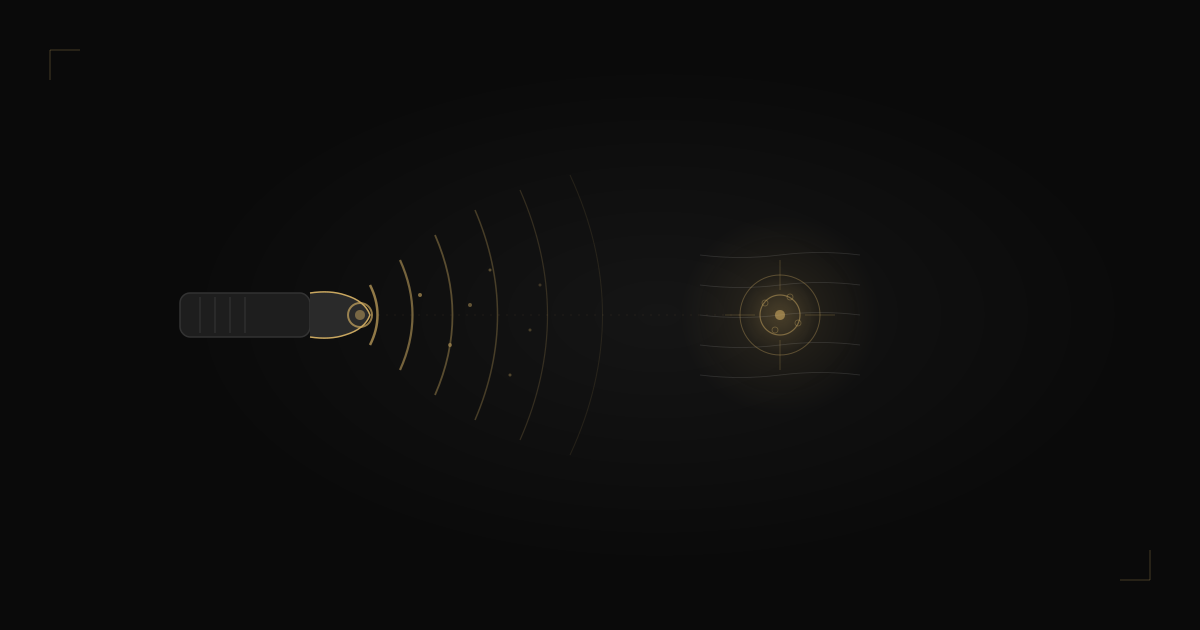
Shockwave therapy delivers high-energy acoustic pulses into damaged tissue to stimulate healing. The technology was first developed in the 1980s to break up kidney stones without surgery. The same acoustic energy was later applied to musculoskeletal tissue. The exact mechanism is not fully understood, but it is thought to stimulate new blood vessel formation, help break down calcium deposits, and prompt tissue repair.
There are two main flavors of the technology, and the difference is worth knowing. Radial pressure wave devices generate a percussive impulse at the skin surface that disperses outward. Focused shockwave devices concentrate the energy at a specific depth. Both types have been studied in clinical trials.
It is reasonable to ask any clinic which type it uses and why it fits your diagnosis.
Conditions Shockwave Is Used For
Patients commute in for shockwave when they have tried other things and stalled. The conditions shockwave is most often used for are chronic soft-tissue and tendon problems:
- Plantar fasciitis. See our plantar fasciitis page.
- Tennis elbow and golfer's elbow. Chronic lateral and medial epicondylitis. Read more on our tennis elbow page.
- Calcific shoulder tendinitis. Calcium deposits in the rotator cuff tendons.
- Rotator cuff tendinopathy. See our post on shockwave therapy for shoulder pain.
- Achilles tendinopathy. Chronic mid-portion and insertional cases.
- Patellar tendinopathy. Jumper's knee. Trial results here are less favorable: one placebo-controlled trial in jumping athletes treated during their competitive season found no benefit over sham treatment.
- Trochanteric bursitis and gluteal tendinopathy. Common in runners and post-menopausal patients.
- Hamstring tendinopathy. Proximal hamstring problems at the sit bone.
A typical plan is 3 to 6 sessions spread over 4 to 8 weeks, and response varies from patient to patient. Acute injuries (anything within the first 4 to 6 weeks) usually do better with conservative care first and become shockwave candidates if they do not resolve. Read what shockwave treats for a deeper dive.
What St. Louis Metro Patients Tell Us
The same patterns come up over and over with our metro patients. Maryland Heights and Creve Coeur patients tend to be active professionals in their 40s and 50s dealing with tennis elbow, plantar fasciitis from running, or chronic shoulder problems from years of office work and weekend sports. Florissant and Hazelwood patients often include nurses, warehouse workers, and tradespeople with chronic tendon overuse injuries from physical labor.
The common thread is that all of these patients have been managing their condition for months or years with combinations of ibuprofen, rest, stretching, physical therapy, and in many cases cortisone injections. Shockwave is rarely the first treatment people try. It is usually considered after the others have plateaued.
What to Expect at Your First Session
A first shockwave visit at our office takes about an hour. Dr. JC starts with a full exam to confirm that shockwave is the right tool for your condition. Some patients who come in looking for shockwave end up with a different recommendation because the exam reveals that their problem is mechanical (joint dysfunction, nerve compression) rather than a tendon or fascia problem. Shockwave is not the right tool for those; chiropractic adjustments or Active Muscle Release may be a better fit.
If shockwave is the right call, the session itself takes about 10 to 15 minutes. The applicator is pressed to the skin over the target area, ultrasound gel ensures good acoustic coupling, and several thousand pulses are delivered over the course of the session. The sensation is firm and intense but tolerable. Patients describe it as a strong tapping or knocking. We adjust intensity based on what you can comfortably handle.
Some patients notice a change soon after treatment. Some experience mild soreness for 24 to 48 hours afterward, similar to the soreness after a hard workout. Response varies from person to person, and we reassess at each visit.
Insurance and Pricing
Shockwave therapy is self-pay at our office. Most major insurance policies classify it as investigational or unproven for musculoskeletal conditions, so coverage is rare. Current self-pay prices, including three- and six-session options, are listed on our shockwave therapy page. A package size is a pricing option, not a prediction of how many treatments you need.
For patients who have insurance for routine chiropractic care, covered chiropractic services may be billed to your plan while shockwave is paid separately. Call (636) 393-8390 to verify your plan's benefits. See our pages on BCBS, UnitedHealthcare, Aetna, Cigna, and Medicare for plan-specific details.
Where We Are
Our office is on St. Charles Rock Road in Bridgeton, at 11520 St. Charles Rock Rd. Plenty of free parking on site. See the areas we serve for your town.
When to Pick Up the Phone
If you have chronic tendon, fascia, or chronic muscle pain that has been present for more than 6 weeks and is not improving with conservative care, you may be a shockwave candidate. The simplest next step is a phone call to discuss your condition. If shockwave is the wrong fit, we will tell you honestly. If it is the right fit, we will explain exactly what to expect.
Schedule an appointment or call (636) 393-8390 to start. We serve patients across Bridgeton, Maryland Heights, Florissant, Creve Coeur, Hazelwood, St. Ann, and the greater St. Louis area.
Related Articles
What Is Graston Technique? A Soft Tissue Therapy Guide
Curious about Graston Technique? Learn how this instrument-assisted therapy breaks down scar tissue, speeds recovery, and treats chronic pain in Bridgeton.
Treatment OptionsShockwave Therapy: What It Treats and How It Works
Learn what shockwave therapy is used for, what trials have found, and who may be a candidate in Bridgeton, MO.