
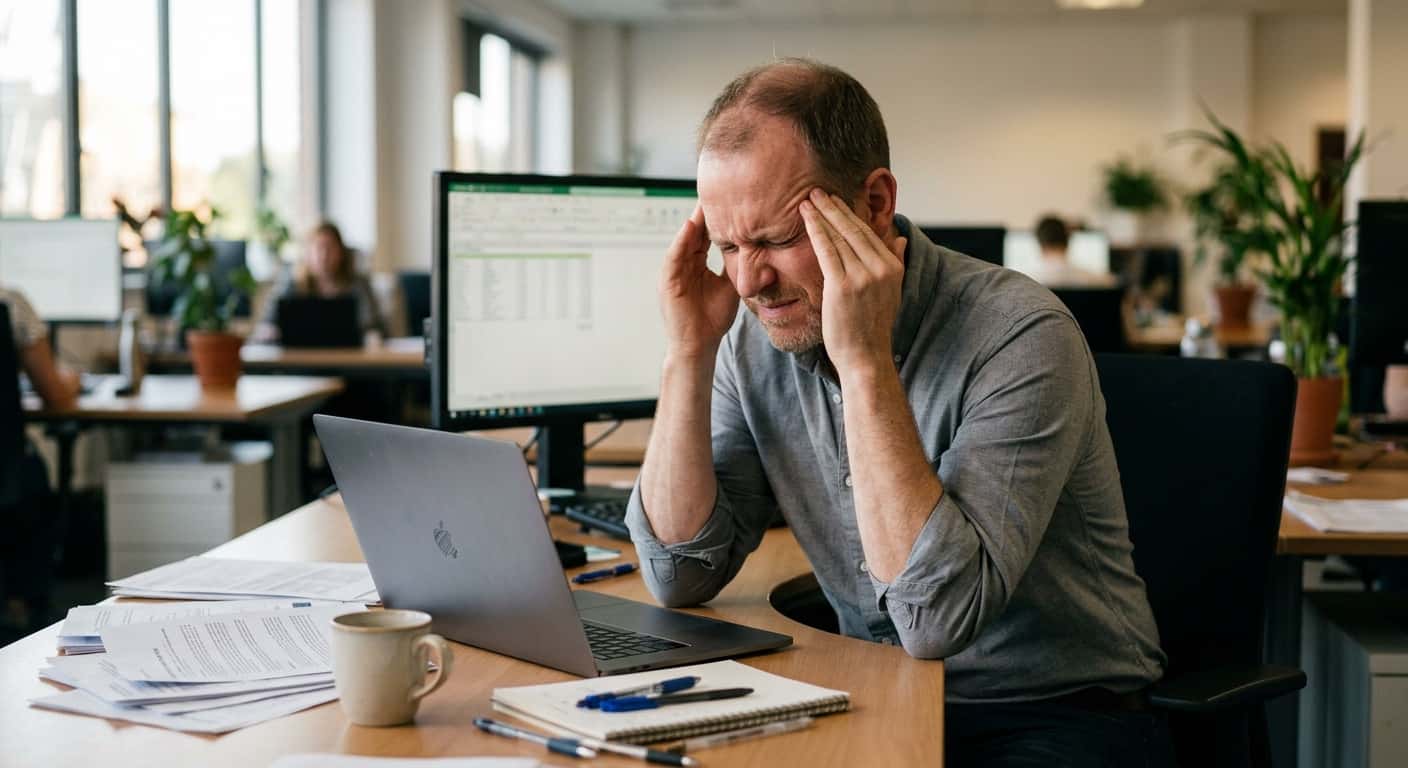
The Headache That Never Seems to Go Away
You know the feeling. A dull, constant pressure wraps around your head like a tight band. Your neck is stiff. Your shoulders are tense. You have been popping pain relievers for days, but the headache keeps coming back as soon as they wear off.
Tension headaches are the most common type of headache, affecting up to 80 percent of the adult population at some point. For many people, they are not occasional inconveniences. They are a recurring problem that affects concentration, productivity, mood, and quality of life.
If this sounds familiar, the solution may not be in your medicine cabinet. It may be in your spine. Our related article on when to see a chiropractor for chronic headaches covers additional warning signs to watch for.
What Causes Tension Headaches?
Tension headaches originate from tightness in the muscles of the neck, scalp, and upper back. But what causes that tightness in the first place? In most cases, the answer involves one or more of the following:
Poor Posture
Forward head posture, rounded shoulders, and slouching create enormous strain on the muscles at the base of your skull and along the back of your neck. Every inch your head moves forward past your shoulders adds roughly 10 pounds of effective weight that these muscles have to support. Phone and screen use is a major contributor to this problem, as we explain in our article on how your phone causes neck pain.
Over hours and days, this constant strain leads to chronic muscle tension that triggers headaches.
Spinal Misalignment
When the vertebrae in your cervical spine (neck) are not properly aligned, they can irritate the nerves and muscles in the area. The upper cervical vertebrae are particularly important because the nerves that exit this region directly influence the muscles and blood flow to your head.
A misalignment here can produce headaches that no amount of stretching or medication will resolve, because the structural cause remains unaddressed.
Stress
Physical and emotional stress causes your muscles to tighten, especially in the neck, shoulders, and jaw. Chronic stress keeps these muscles in a constant state of contraction, which restricts blood flow and creates the tension patterns that lead to headaches.
Jaw Clenching and TMJ Problems
If you grind your teeth or clench your jaw, especially at night, the tension in your jaw muscles radiates up into your temples and across your forehead. This connection between the jaw and headaches is often overlooked. Learn more about how jaw dysfunction contributes to pain on our TMJ and jaw pain page.
How Chiropractic Care Approaches Tension Headaches
Unlike pain medication, which temporarily blocks the sensation of pain, chiropractic care targets the structural and muscular issues that produce tension headaches. At Advanced Wellness Chiropractic, Dr. JC uses a complete approach to break the cycle of chronic headaches.
Cervical Adjustments
Chiropractic adjustments to the cervical spine restore proper alignment and joint mobility in the neck. When the vertebrae are moving correctly, the muscles around them can relax. Nerve irritation decreases. Blood flow improves.
A randomized trial published in the Journal of Manipulative and Physiological Therapeutics (Boline et al., 1995) found that people with chronic tension-type headaches who received spinal manipulation had lower headache intensity and frequency than at baseline four weeks after treatment ended. Guidelines published in the same journal (Bryans et al., 2011) rated the evidence for spinal manipulation on its own in tension-type headache as equivocal.
Soft Tissue Treatment
Tight muscles in the neck and upper back are both a cause and a consequence of tension headaches. They tighten because of misalignment and poor posture, and the resulting headaches cause further muscle guarding, creating a self-reinforcing cycle.
Graston Technique uses stainless steel instruments to break up adhesions and scar tissue in the muscles of the neck and upper back. Active Muscle Release targets specific trigger points that refer pain into the head. Together, these therapies release the muscular component of tension headaches.
Massage Therapy
Massage therapy complements adjustments by providing broader relaxation of the muscles in the neck, shoulders, and upper back. Regular massage helps prevent the buildup of tension that leads to headaches.
Many of our patients find that a combination of adjustments and massage provides the most complete relief from chronic tension headaches.
The Neck-Headache Connection
Your neck plays a central role in tension headaches. The suboccipital muscles at the base of your skull are some of the most densely innervated muscles in the body. When they are tight or the joints they attach to are restricted, the signals they send to your brain can produce headache symptoms.
This is why headache treatment that focuses only on the head itself often fails. The source of the problem is usually several inches lower, in the joints and muscles of the upper cervical spine.
At Advanced Wellness Chiropractic, we always evaluate the neck when a patient presents with headaches. More often than not, we find restrictions in the upper cervical spine that directly correlate with the patient's headache pattern.
What the Research Says
Guidelines for tension-type headache: Evidence-based guidelines published in the Journal of Manipulative and Physiological Therapeutics (Bryans et al., 2011) did not recommend spinal manipulation for episodic tension-type headache and could not make a recommendation for or against it for chronic tension-type headache. The guidelines noted that low-load craniocervical mobilization may be beneficial for longer term management of episodic or chronic tension-type headaches.
Manual and exercise treatment for headache: A systematic review and meta-analysis published in Cephalalgia (Luedtke et al., 2016) looked at interventions used by physiotherapists for headache and found a reduction in tension-type headache pain intensity. Most of the included trials had a high risk of bias in more than one area.
Manipulation vs. medication: A randomized trial published in the Journal of Manipulative and Physiological Therapeutics (Boline et al., 1995) compared spinal manipulation to the antidepressant amitriptyline for chronic tension-type headaches. Both groups improved during the treatment period. Four weeks after treatment ended, the manipulation group had kept their improvement while the medication group had returned to baseline.
Lifestyle Factors That Make a Difference
In addition to in-office treatment, Dr. JC will discuss lifestyle modifications that can reduce headache frequency:
- Workstation ergonomics. Positioning your screen at eye level and keeping your shoulders relaxed can dramatically reduce neck strain.
- Regular breaks. If you sit for work, getting up every 30 to 45 minutes to move and stretch prevents muscle tension from accumulating.
- Hydration. Dehydration is a common and easily correctable headache trigger.
- Sleep position. Sleeping on your stomach forces your neck into a rotated position for hours. Side or back sleeping with a supportive pillow is better for your cervical spine.
- Stress management. Finding effective ways to manage stress, whether through exercise, breathing techniques, or other methods, reduces the muscular tension that drives headaches.
When Headaches Need Attention
Most tension headaches respond well to chiropractic care. However, certain headache symptoms warrant immediate medical attention:
- A sudden, severe headache unlike anything you have experienced before
- Headache accompanied by fever, stiff neck, confusion, or vision changes
- Headache following a head injury
- A headache pattern that changes dramatically in frequency or intensity
These could indicate a more serious condition that requires urgent evaluation.
Stop Living With Headaches
If tension headaches are a regular part of your life, you do not have to accept that as normal. An evaluation can look for what may be driving them.
At Advanced Wellness Chiropractic in Bridgeton, MO, Dr. JC evaluates and treats patients dealing with chronic headaches and migraines.

Related Articles
Back Pain After Mowing: Causes, Relief, and Warning Signs
Back pain after mowing or yard work? Learn what causes it, what helps during the first 48 hours, and when to see a Bridgeton chiropractor.
Pain ReliefGLP-1 Joint Pain: Causes and Chiropractic Care
New back, knee, or joint pain while taking a GLP-1 medication? Learn possible causes and how chiropractic care may help in Bridgeton, Missouri.
Pain ReliefSciatica: When to Call a Chiropractor vs. Go to the ER
Sciatica pain that won't quit? Most cases respond to chiropractic care, but a few warning signs mean head to the ER. Here is how to tell.